

 By:
By:
 Editor:
 Clinical Reviewer:

What Is Xanax?
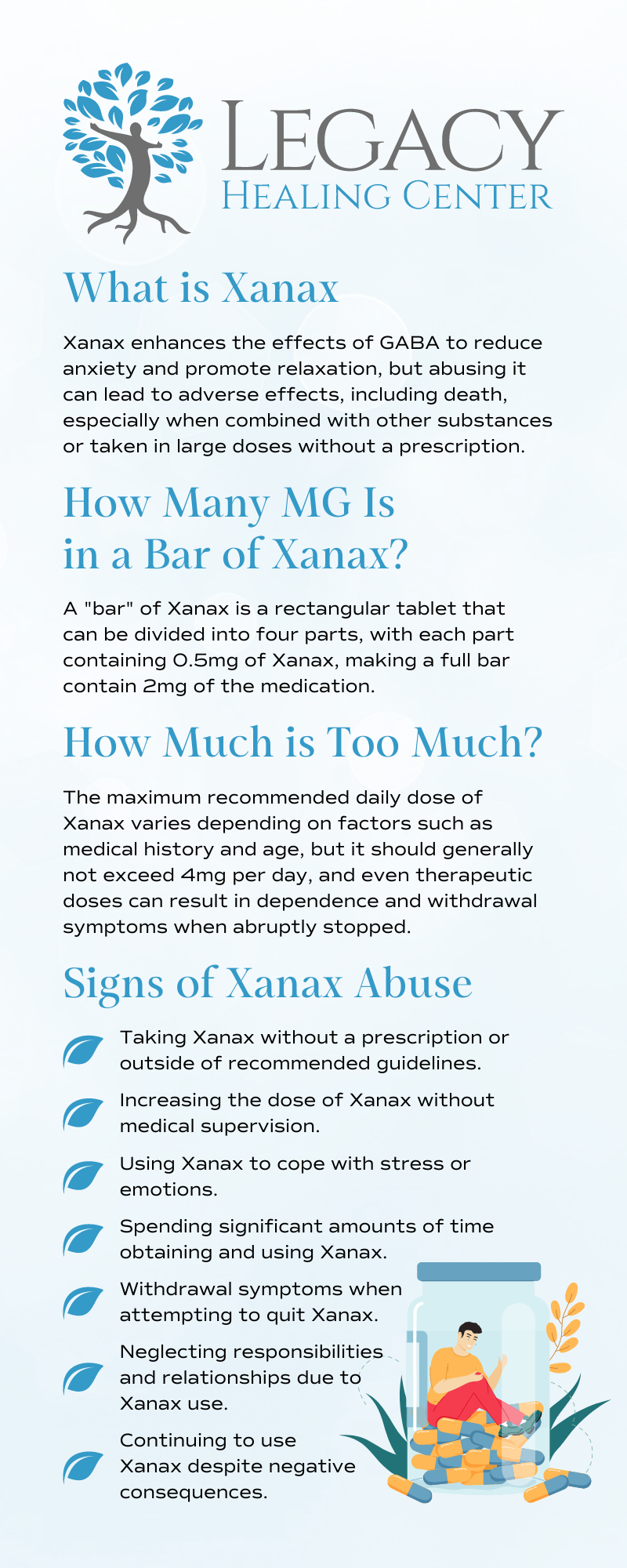
Xanax works by enhancing the effects of gamma-aminobutyric acid (GABA), a neurotransmitter that slows down brain activity. This results in a calming effect, reducing anxiety and promoting relaxation. However, when taken in large doses or without a prescription, Xanax can lead to a variety of adverse effects, including drowsiness, confusion, slurred speech, memory impairment, poor coordination, reduced inhibitions, mood, paranoia, respiratory depression, coma, seizures, and even death. Xanax abuse is particularly dangerous when combined with other substances, such as alcohol or opioids, or when too much Xanax is taken, as this can increase the risk of overdose and death. Before a tragedy, learn about rehab cost and estimated treatment timelines.
Understanding Safe Xanax Dosages
One of the most common misconceptions about Xanax is that there is a single dose that is “safe” for everyone. In reality, there isn’t. A dose that provides mild anxiety relief for one person could cause profound sedation, memory impairment, or even dangerous respiratory depression in another.
When physicians prescribe Xanax (alprazolam), they aren’t simply choosing a number of milligrams, they’re weighing your diagnosis, age, liver function, current medications, history of substance use, and even how sensitive you are to medications that affect the central nervous system. That’s why two people with the same diagnosis may leave the doctor’s office with completely different prescriptions.
Did you know?
Typical Prescribed Xanax Doses
For generalized anxiety disorder, most adults begin with 0.25 mg to 0.5 mg taken three times daily. If symptoms remain uncontrolled and the medication is well tolerated, physicians generally increase the dose gradually, usually no more often than every three to four days. The FDA-recommended maximum daily dose for generalized anxiety disorder is 4 mg per day, divided into multiple doses.
For panic disorder, dosing is often different because panic attacks tend to occur suddenly and can be more severe. Many patients start at 0.5 mg three times daily, with adjustments based on symptom control and side effects. Some people with severe panic disorder ultimately require higher daily doses under close medical supervision, although physicians still aim to use the lowest effective dose for the shortest necessary duration.
One important point that surprises many patients is that the total daily dose matters more than the strength of an individual tablet. Taking four 0.5 mg tablets throughout the day exposes the body to the same total amount of alprazolam as taking one 2 mg tablet, even though the experience may feel very different depending on timing and formulation.
Why Doctors Almost Always Start Low
Patients frequently wonder why they’re prescribed only 0.25 mg when they know someone taking 2 mg “bars.”
The reason is simple: physicians can’t accurately predict how sensitive someone will be to benzodiazepines until they’ve taken them.
A first dose that seems “too small” is often intentional. Starting low allows clinicians to determine:
- how much sedation the medication causes
- whether memory or coordination become impaired
- whether anxiety improves at a lower dose
- whether the patient experiences paradoxical agitation, which can occasionally occur with benzodiazepines
- how the medication interacts with other prescriptions or alcohol use
The FDA specifically recommends increasing doses slowly, typically no more frequently than every three to four days, because the medication’s full effects and side effects may not be apparent after only one or two doses.
A Little-Known Fact About Xanax Dosing
One of the most misunderstood aspects of Xanax is that feeling less effect over time doesn’t necessarily mean the medication has become weaker.
As Dr. Ash Bhatt, whose benzodiazepine guidance has influenced clinicians around the world, explained:
“Tolerance develops to the sedative effects of benzodiazepines much more rapidly than to their anti-anxiety effects.”
This means many people begin increasing their dose because they no longer feel sleepy or “feel the medication working,” even though the anti-anxiety benefit may still be present. That pursuit of the original calming sensation is one reason doses sometimes escalate beyond what was originally prescribed.
Immediate-Release vs. Extended-Release Xanax
Although both medications contain alprazolam, they behave differently in the body.
Immediate-release (IR) Xanax begins working quickly, often within 30 to 60 minutes, and reaches peak blood levels relatively fast. Because its effects also wear off sooner, it is commonly prescribed multiple times throughout the day for ongoing anxiety.
Extended-release (XR) Xanax was designed to release alprazolam more gradually. Instead of creating several peaks and valleys throughout the day, it maintains steadier blood concentrations and is usually taken once each morning. Patients should never crush, chew, or split XR tablets because doing so can release the medication too quickly.
Interestingly, many patients discussing their experiences online report that XR formulations feel “smoother” and produce fewer noticeable highs and lows than immediate-release tablets. Others note that they don’t experience the same abrupt return of anxiety between doses that they felt with standard Xanax. These anecdotal reports align with the pharmacologic goal of the extended-release formulation, although individual responses vary.
Understanding Xanax Tablet Strengths
| Formulation | Available Strengths |
|---|---|
| Standard Immediate-Release Xanax Tablets | 0.25 mg, 0.5 mg, 1 mg, 2 mg |
| Extended-Release Xanax Tablets | 0.5 mg, 1 mg, 2 mg, 3 mg |
One of the biggest misconceptions is that a 2 mg “Xanax bar” automatically represents an unsafe dose. In reality, the tablet strength alone doesn’t determine whether a dose is appropriate. A patient with severe panic disorder who has been carefully titrated over time may legitimately receive a 2 mg tablet, while that same amount could cause dangerous sedation in someone who has never taken a benzodiazepine before.
When Does a “Safe” Dose Become Too Much?
There is no universal number of milligrams that defines “too much.” Instead, physicians evaluate the entire clinical picture. A dose becomes significantly more dangerous when:
- you take more than prescribed to achieve the same effect
- you combine Xanax with alcohol, opioids, or other sedating medications
- you have underlying liver disease or are an older adult, both of which can slow drug clearance
- you obtain counterfeit Xanax tablets, which may contain fentanyl or other unexpected substances
These factors explain why two people taking the exact same number of milligrams can experience dramatically different outcomes, and why medication should always be taken exactly as prescribed.
Why the Same Dose Can Affect People Differently
Before talking about milligrams, it’s important to understand that the same Xanax dose can produce dramatically different effects from one person to the next. Your age, medical history, previous exposure to benzodiazepines, and even what you ate or drank that day can all influence how your body responds. That’s why physicians don’t prescribe Xanax using a one-size-fits-all approach—they tailor the dose to the individual.
The First-Time User
If you’ve never taken Xanax before, even a relatively small dose may feel surprisingly strong. Many first-time users report feeling unusually sleepy, lightheaded, mentally “foggy,” or unsteady on their feet after taking just 0.25 mg or 0.5 mg. Because your brain hasn’t adapted to the medication, the calming effects—and the side effects—are often much more noticeable. This is one of the main reasons doctors almost always begin with the lowest effective dose rather than assuming you’ll need more.
The Long-Term User Who “Doesn’t Feel It Anymore”
Many people who have taken Xanax for months or years eventually say something like, “It doesn’t work like it used to.” In many cases, what’s changed isn’t the medication—it’s the body’s response to it. Over time, the brain becomes less sensitive to some of Xanax’s effects, particularly sedation. As a result, someone may feel tempted to increase their dose even though the medication is still affecting reaction time, judgment, memory, and breathing. This is one of the reasons healthcare providers are cautious about long-term dose increases, since higher doses often lead to more side effects without providing proportionally greater symptom relief.
The Older Adult
A dose that is well tolerated by a healthy 30-year-old can have a much stronger effect in someone over 65. As we age, the liver and kidneys often process medications more slowly, allowing Xanax to remain in the body longer. Older adults are also generally more sensitive to medications that affect the brain, increasing the risk of excessive drowsiness, confusion, falls, and memory problems. For this reason, physicians frequently prescribe lower starting doses for older patients and increase them more cautiously than they would for younger adults.
The Person Who Drinks Alcohol or Takes Other Medications
Perhaps the biggest mistake people make is assuming that a dose that’s safe on its own will be equally safe when combined with something else. Alcohol, opioid pain medications, sleep aids, muscle relaxants, and other sedatives all depress the central nervous system. When combined with Xanax, their effects don’t simply add together—they can amplify one another, significantly increasing the risk of profound sedation, slowed breathing, loss of consciousness, and overdose. In many fatal benzodiazepine overdoses, another central nervous system depressant is involved alongside Xanax.
The Person With Liver Disease or Other Health Conditions
Because Xanax is primarily broken down by the liver, people with impaired liver function may clear the medication much more slowly than someone with a healthy liver. This means a standard dose can stay in the bloodstream longer and continue producing effects well after it would normally begin wearing off. Certain medical conditions and medications can also change how alprazolam is metabolized, causing drug levels to rise unexpectedly. That’s why healthcare providers review a patient’s full medical history—not just their anxiety symptoms—before deciding what dose is appropriate.
Signs You’ve Taken Too Much Xanax
Taking more Xanax than prescribed doesn’t automatically mean you’ve overdosed—but the risk rises as the dose increases, especially when the medication is taken more frequently than directed or combined with alcohol, opioids, or other sedatives. Because there is no single milligram amount that causes an overdose in everyone, it’s impossible to define one universal “dangerous dose.”
An overdose occurs when the amount of Xanax in the body begins to overwhelm the brain and central nervous system, leading to severe drowsiness, confusion, loss of consciousness, slowed or stopped breathing, or other life-threatening complications. Knowing how to recognize these warning signs is just as important as understanding safe dosages.
Learn more: Read our complete guide to Xanax Overdose, including overdose symptoms, when to call 911, emergency treatment, recovery, and what to do if you suspect someone has taken too much Xanax.
When Does Taking Too Much Xanax Become an Overdose?
Taking more Xanax than prescribed doesn’t automatically mean you’ve overdosed—but the risk rises as the dose increases, especially when the medication is taken more frequently than directed or combined with alcohol, opioids, or other sedatives. Because there is no single milligram amount that causes an overdose in everyone, it’s impossible to define one universal “dangerous dose.”
An overdose occurs when the amount of Xanax in the body begins to overwhelm the brain and central nervous system, leading to severe drowsiness, confusion, loss of consciousness, slowed or stopped breathing, or other life-threatening complications. Knowing how to recognize these warning signs is just as important as understanding safe dosages.
Learn more: Read our complete guide to Xanax Overdose, including overdose symptoms, when to call 911, emergency treatment, recovery, and what to do if you suspect someone has taken too much Xanax.
Mixing Xanax With Alcohol or Opioids: What Most People Don’t Realize
Almost every warning about Xanax says “don’t mix it with alcohol or opioids,” but few explain why this combination is so dangerous—or answer the questions people actually have.
The first misconception is that you have to take them at the same time. In reality, Xanax can remain in your body long after you stop feeling its effects, meaning alcohol, opioid pain medications, or other sedatives taken hours later may still interact with it. Many people assume they’re safe because they took Xanax earlier in the day or only had “a couple drinks” later that evening, when both substances may still be affecting the brain.
The second misconception is that the biggest danger is simply stopping breathing. While respiratory depression is the most life-threatening complication, it often isn’t the first problem to appear. Xanax, alcohol, and opioids can impair judgment, memory, and self-awareness, making it easier to forget you’ve already taken a dose, continue drinking despite being heavily intoxicated, or accidentally take additional medication. This loss of judgment is one of the reasons accidental overdoses happen so often.
What many people get wrong:
Myth: You only have to worry if you take Xanax and alcohol together.
Reality: Xanax may still be active in your body many hours later, allowing alcohol or other sedatives taken afterward to interact with it.
Myth: If you don’t feel overly sedated, you’re probably okay.
Reality: Judgment and memory are often impaired before people recognize how intoxicated they are, leading them to take additional Xanax or continue drinking.
Myth: Only opioids make Xanax dangerous.
Reality: Any medication or substance that slows the central nervous system—including alcohol, sleeping pills, muscle relaxants, gabapentin, and some antihistamines—can multiply Xanax’s effects.
As the dose of Xanax increases, these risks become even greater. Many serious overdoses involve more than one central nervous system depressant, not because any single medication was taken in an extremely high dose, but because their combined effects overwhelm the brain’s ability to control alertness and breathing. Understanding these interactions is one of the most effective ways to prevent an accidental overdose.
How Many MG Is a Xanax Bar?
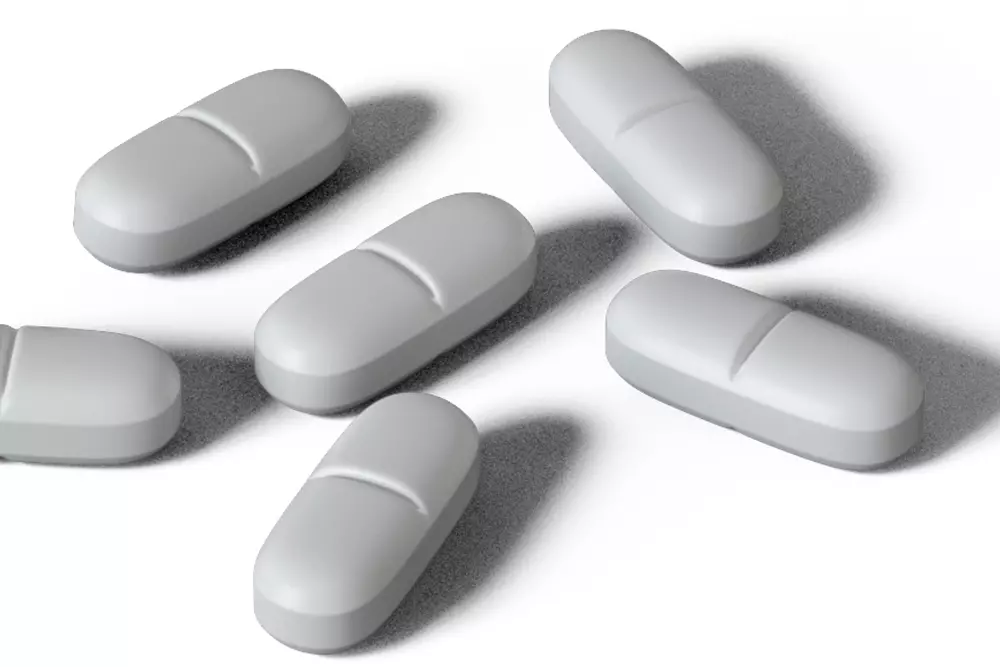
A “bar” of Xanax typically refers to a rectangular tablet that is made to be divided into four equal parts. Each part of the bar contains 0.5mg of Xanax, so a full bar contains a total of 2mg of the medication. It is important to note that Xanax should only be taken as prescribed by a healthcare provider and that misuse or abuse of the medication can have serious consequences.
Signs of Xanax Abuse
It is crucial to recognize the signs of Xanax abuse, such as taking too much Xanax, to seek professional help if needed. Some common signs of Xanax abuse include:
- Taking Xanax without a prescription or outside of recommended guidelines.
- Increasing the dose of Xanax without medical supervision.
- Using Xanax to cope with stress or emotions.
- Spending significant amounts of time obtaining and using Xanax.
- Withdrawal symptoms when attempting to quit Xanax.
- Neglecting responsibilities and relationships due to Xanax use.
- Continuing to use Xanax despite negative consequences.
Legacy Healing Center Can Help You or a Loved One if Someone Is Taking Too Much Xanax
Xanax abuse is a serious issue that can lead to addiction, overdose, and death. While the recommended dose of Xanax varies depending on individual factors, any amount taken without a prescription or outside of recommended guidelines is considered abuse, and too much Xanax. At Legacy Healing Center, we provide personalized addiction treatment programs that address the physical and psychological effects of Xanax addiction. If you or a loved one is struggling with Xanax abuse, don’t hesitate to reach out to us for professional help. Our experienced team can help guide you through the recovery process and provide the necessary tools for long-term sobriety.
If you or a loved one is currently struggling with an active addiction, our Legacy Healing detox centers have the levels of care and therapy programs that can aid in a safe and comfortable recovery from withdrawals.
Call us today at 888-534-2295 to learn more about these programs and how they can help you overcome your own addiction.